
Our Mission
Funding
FUNDED PROJECTS
Donations
Who We Are
From Çatalhöyük to Türkmen-Karahöyük – Continuity and Change in House and Household in the Konya Plain, 6500–100 cal BCE
Michele Rüzgar Massa (Ankara, Turkey)
This project explores how people built, lived, rebuilt, and ultimately abandoned their houses during the late 1st millennium BCE at Türkmen-Karahöyük, one of the largest archaeological settlements in central Anatolia (Turkey), covering more than 200 hectares. It was a major urban centre for much of the Bronze and Iron Ages and remained important well into the Hellenistic period. Yet, unlike the famous coastal cities of western Anatolia, inland settlements like Türkmen-Karahöyük have been largely overlooked in studies of the late 1st millennium BCE. As a result, we know surprisingly little about how people lived in their houses, organised their households, and structured daily activities in this region during that time.
Türkmen-Karahöyük is also close to the UNESCO World Heritage Site of Çatalhöyük, one of the most intensively investigated Neolithic sites in the world, where a particular focus on household archaeology has provided a wealth of studies that we could tap to understand how did everyday domestic life change – or persist – over six thousand years in the same landscape.
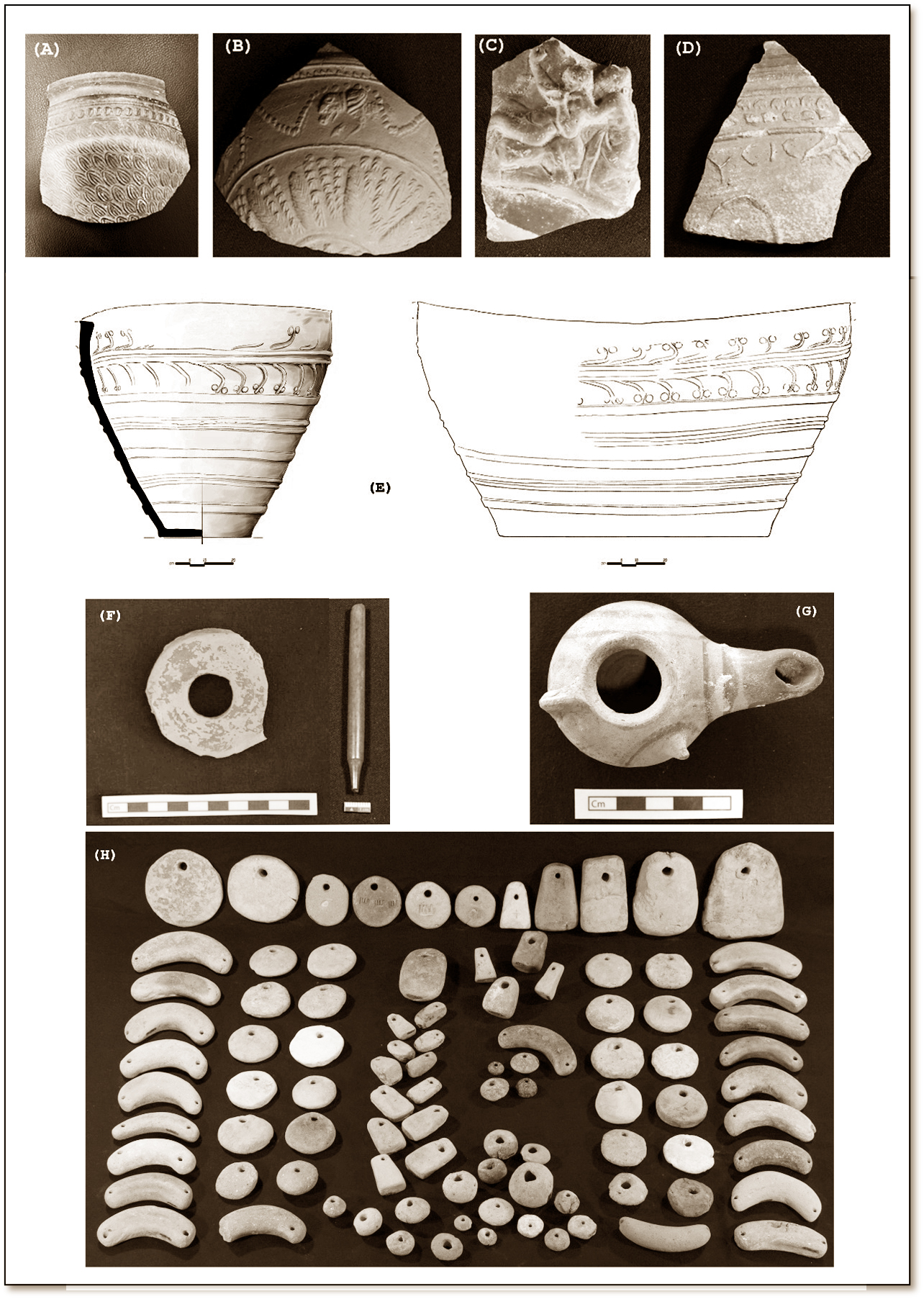
The focus of this project is a remarkably well-preserved Late Hellenistic residential complex excavated in Field 1 at Türkmen-Karahöyük. The building was destroyed by a major fire sometime between the late 2nd and mid-1st century BCE. Because the destruction was sudden, most fixtures and objects were left in situ, providing a rare glimpse into the horizon of use of these spaces. This makes the house an exceptional case study for the detailed reconstruction of domestic life. In addition, preliminary analysis shows several similarities with much earlier Çatalhöyük striking continuities in building materials and techniques, such as the use of mudbrick, reeds, and plaster, and even in how houses were conceptually “renewed” over time.
In particular, the house was rebuilt twice after the fire, each time following almost exactly the same plan. Walls were levelled, reused as foundations, and incorporated into new structures – a practice that immediately recalls Neolithic traditions. At the same time, the Hellenistic houses show important differences: orthogonal layouts, doorways, new types of hearths, and specialized spaces linked to activities such as textile production and bathing.
The project brings together excavation, architectural analysis, and a wide range of scientific approaches, including archaeobotany, zooarchaeology, archaeometry and micromorphology. By combining these datasets, we aim to reconstruct not just what the house looked like, but how it functioned, how long it was used, what people did in different rooms, and how this household was connected to the wider city and its economy. More broadly, the project sets out a new framework for studying houses and households in Hellenistic Anatolia – one that places everyday life, long-term continuity, and local traditions at the centre.
By directly comparing Türkmen-Karahöyük with Çatalhöyük, only 15 km away but separated by six millennia, we hope to show how deeply rooted practices of living, building, and belonging shaped communities in the Konya Plain over the very long term.
Funding period: 2026–